

Capstone Concept
Dying for Sodium: The Hidden Dangers of Excess is a
dos-à-dos style book designed to raise public awareness of the hidden sodium in the American food system. Structured as two companion volumes bound together, the project delivers both a manifesto and a data resource in a single cohesive design.
The front volume moves a general public reader through eight chapters that move from foundational curiosity about what sodium actually is, through systemic exposure of policy failure and industry infrastructure, to the human cost of navigating a culture built on excess. The design is typographic and editorial, using visual systems, scientific data, community voices, and personal narrative to guide the reader toward awareness without assigning conclusions.
The back volume, Truth in the Numbers: What the Menu Never Showed You, emphasizes sodium data for America’s most recognized restaurants and sourced directly from publicly disclosed nutritional information. The data speaks without editorial commentary. The numbers do not hide.
The central concept guides readers through the evidence, allowing them to piece together how sodium excess became normalized within the American food system. Industry infrastructure, labeling language, policy, and everyday food culture each play a role in shaping what has become accepted as normal. The project asks readers to look closer and question why.
Basis of Concept
The concept of Dying for Sodium stemmed from the personal connection to the varying sodium needs within my household. Due to medical circumstances, my husband requires a low sodium diet of no more than 1,500 milligrams of sodium, while I need a higher sodium intake. Discovering a food system saturated with processed foods containing excessive sodium, both in grocery stores and restaurants, was an illuminating and devastating moment.
Years of navigating this health journey with my husband showed me how little the public understands sodium, the long-term impact of excess sodium on the body, and the overwhelming need for greater public awareness.
Challenges
The personal connection to my capstone created the challenge of balancing my own voice and experience with a topic that has been debated and challenged within the food industry, while grounding the project in scientific research.
Another challenge was bringing attention to the hidden history of excess sodium, the voices that have been overlooked, and the impact that excess sodium can have on everyday life.
The project also needed to guide readers through the information without telling them what to think. The goal was to create an experience that allowed readers to form their own understanding and expand their awareness of sodium excess.
Timeline
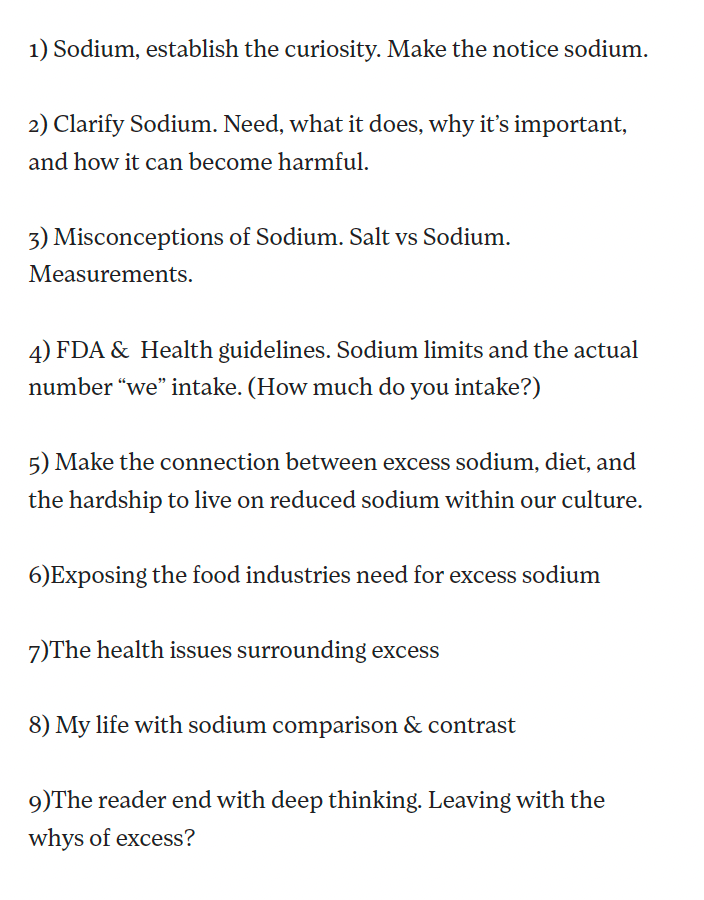
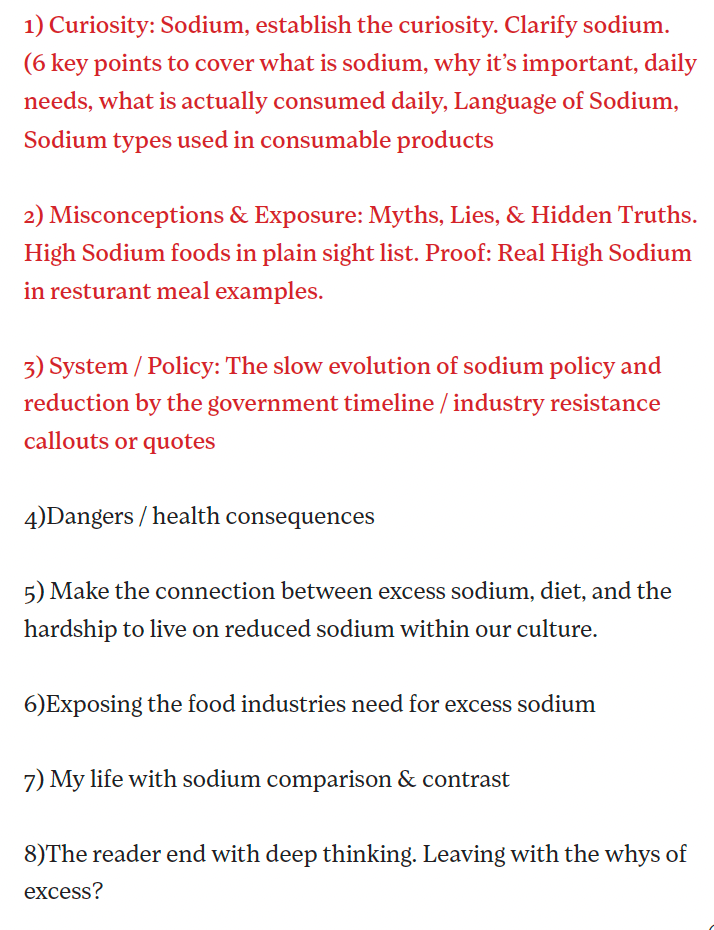
The creation of the dos-à-dos book took over eleven weeks. The first four weeks focused on research backed by scientific sources, conceptualization, and iterative chapter outlines.
Weeks five and six focused on sketchbook explorations and storyboard layouts. Weeks seven and eight transferred the storyboard layouts into digital designs.
Weeks nine and ten focused on finalizing design elements, collecting and incorporating six weeks of restaurant data, printed layout reviews, and corrections. Week eleven focused on the final review and preparing the book for printing.
Results
Dying for Sodium: The Hidden Dangers of Excess is a 47-page manifesto-driven book that allows readers to discover what sodium is, how quickly it accumulates within a daily diet, and how excess has become normalized within American food culture. Through sodium facts, a detailed timeline of policy and regulation, hidden lobbying influence, overlooked voices, and personal narrative, the book leads the reader toward one final question: Why is excess still normalized?
The book is designed to guide the reader into awareness without telling them what to think, allowing the facts presented to create their own realization and interpretation.
Turn the book over and the conversation shifts to Truth in the Numbers: What the Menu Never Showed You. This companion publication focuses on the reality of sodium in restaurant meals. Featuring 14 restaurants, from fast food such as McDonald’s to sit-down restaurants such as Olive Garden, the 85-page book documents sodium levels across real meals and exposes how quickly excess can accumulate in everyday dining.
Together, the two publications move from awareness to evidence, creating a complete exploration of sodium excess through research, narrative, and visual communication.


The Process
Research & Content Development


Sketchbook & Storyboard


Design Details


